St Thomas’ has many special features of historical interest, some dating back to Norman times. This section highlights just a few but if you are looking for more information, you’ll find it in past issues of FOST news.
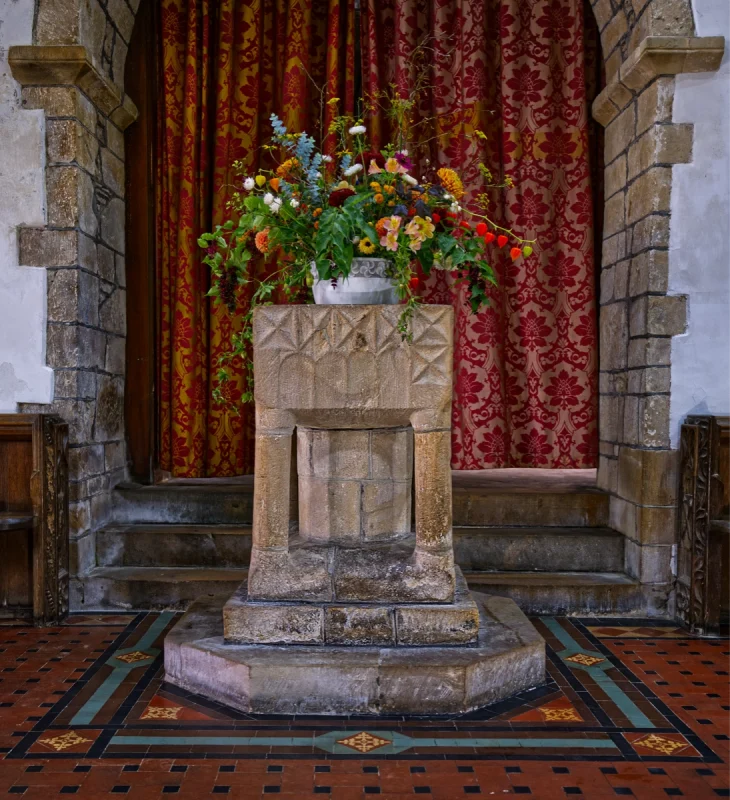
The font
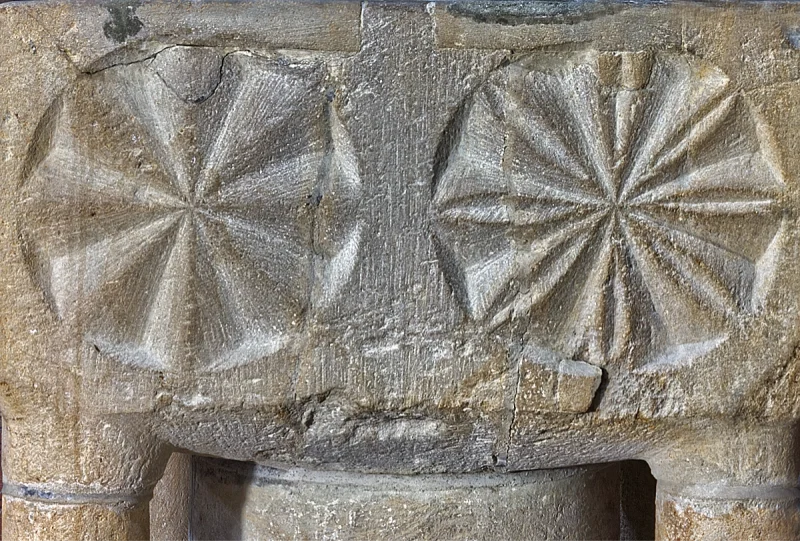
The font is Norman, dating from about 1150, a testament to hundreds of baptisms over the years. The carved stonework sits on a modern double stepped plinth and is supported by four slender colonnettes. In the centre is a sturdy round pedestal formed from two courses, directly beneath the lead-lined circular bowl. The font was removed from the baptistry and seriously damaged in Cromwell’s time. It was found broken and filled with rubbish in the south-west corner of the church and finally repaired and reinstated in 1870 by Thomas England. If you look carefully, you can see the repairs to the south and north faces of the font and the south-eastern colonnette. Curiously there is no functioning drainage hole in the base of the bowl, so it’s a matter of bailing out – rather than draining out – the water after each baptism.
The bells
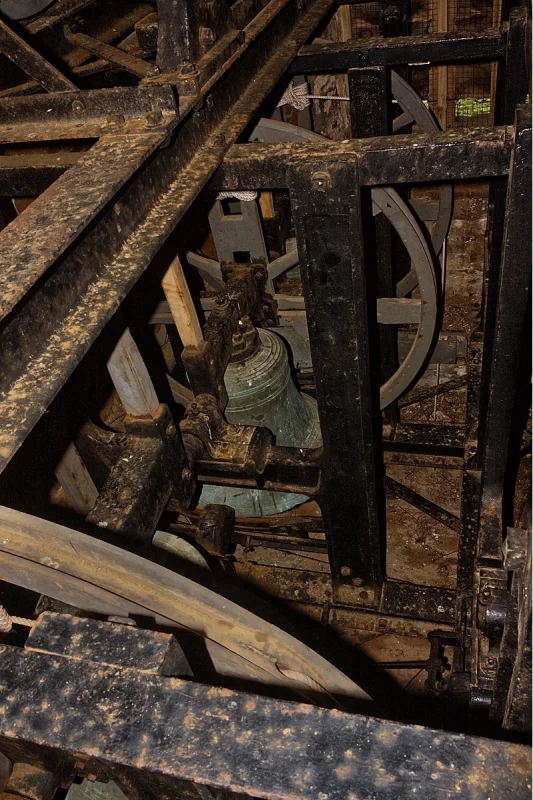
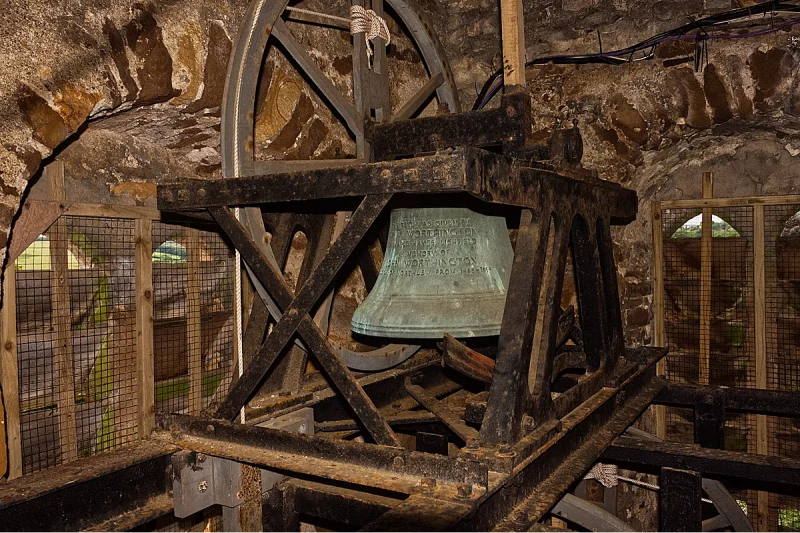
There are six bells, five of which were installed in the late sixteenth century. They were rehung in 1925 when the first (treble) bell was given in memory of John Worthington, Rector of Northlew. The second and third are engraved J P & Co 1772, based in Loughborough. The fourth was made by the same company and inscribed Peace and good neighbourhood. The fifth bell carries the name Edward Watkins C W & P & Co 1772 while the sixth (and largest at 35 inches) was installed twenty-seven years later. It states rather ominously: I to the church the living call, and to the grave I summon all. J P 1799.
In days gone by, Northlew bell ringers were the champions of Devon, competing against other parishes. Prize ringing was very competitive, with the bells rung in English full circle style. The prize went to those who struck the bells in the neatest and most regular way. These days the bells are rung at Christmas, weddings and other special occasions.
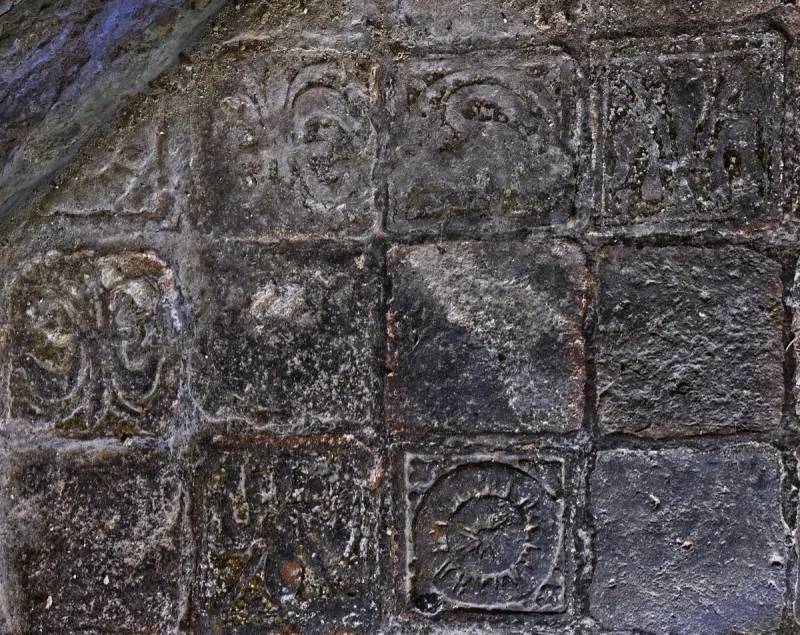
The floor of the bell ringing chamber is made from rare Barnstaple glazed and embossed clay tiles from the 15th/16th century. The central tiles are well worn by the feet of bell ringers, but some closer to the walls have survived, with designs including the pelican, the Tudor rose and fleurs-de-lys.
Clock
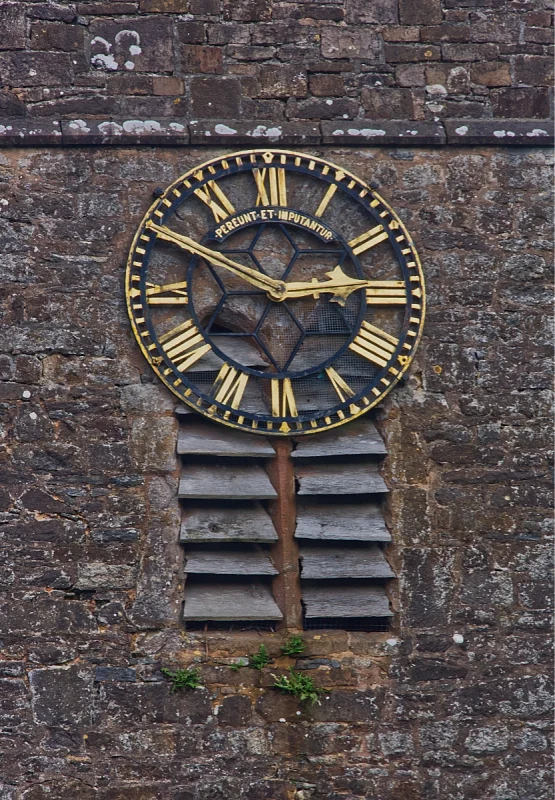
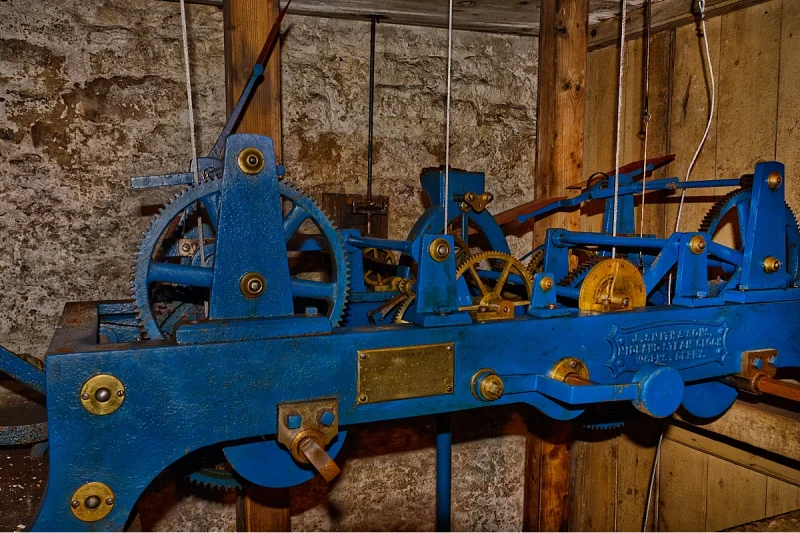
The tower clock was made by John Smith & Son of Derby and was installed in 1897 to mark the Diamond Jubilee of Queen Victoria. The inscription on the clock face reads Pereunt et imputantur meaning They perish and are imputed. It refers to the hours that pass by and are set down against us if we waste them. There is a similar inscription on the Astronomical Clock in Exeter Cathedral.
The clock is wound by hand twice a week which involves clambering up a ladder and through a small hatch, working as quickly as possible to avoid being deafened when the clock strikes on the quarter hours. Like many others, our clock face uses IIII rather than Roman numerals IV for four o’clock. Some say it gives better visual balance with the VIII on the other side, others that it helps avoid confusion with VI which is rather close by (and upside down).
Henry Willis pipe organ
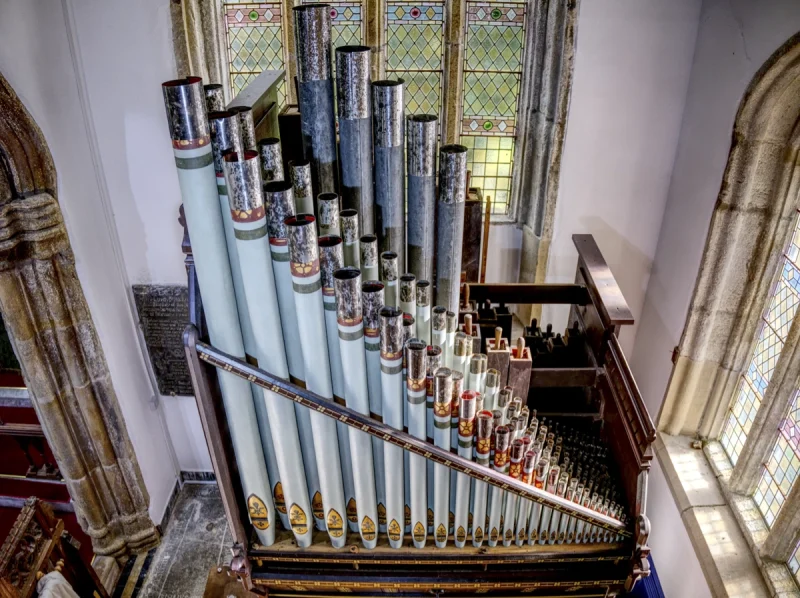
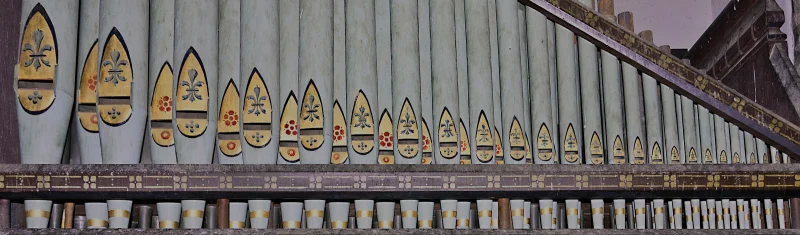
The organ in the Holway Chapel is a rare example of a St Cecilia Scudamore organ made by ‘Father’ Henry Willis who was responsible for more than half the cathedral organs in Britain including Exeter and St Paul’s. The Scudamores are small pipe organs specially designed for village churches to replace the harmoniums in use in the mid-1800s. The organ was originally built for King’s College Hospital Chapel in 1859 but was later replaced with a larger one when the Chapel was pulled down. Northlew was fortunate to acquire their Scudamore in 1889 and Henry Willis himself supervised its installation.
It’s a much-loved instrument and is used every week. Although generally sound, it had become rather tired and needed a thorough overhaul to restore the worn action and the original patterns on the pipework. In 2024, specialist organ builder Michael Farley Organ Builders Ltd undertook the renovation and artist Alison Henham restored the casing and intricate pipe decoration following a successful fund-raising campaign to which FOST contributed.
Carved Tudor bench ends
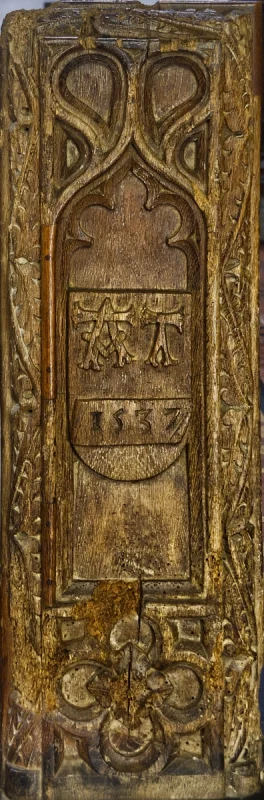
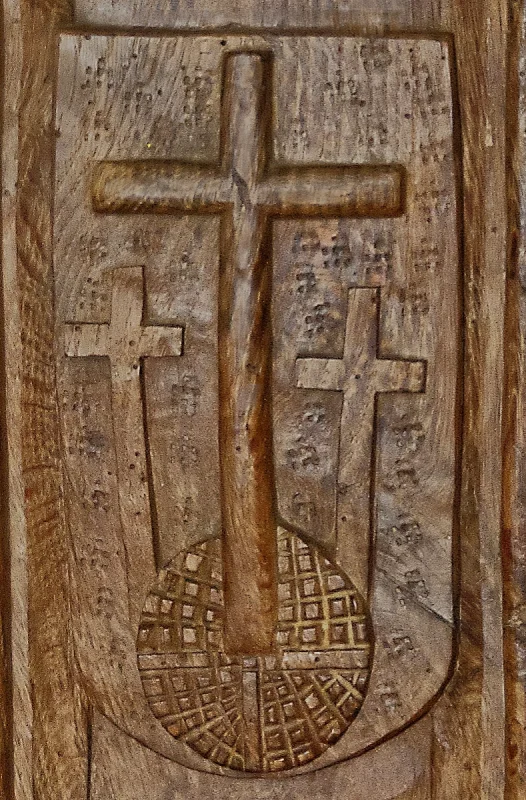
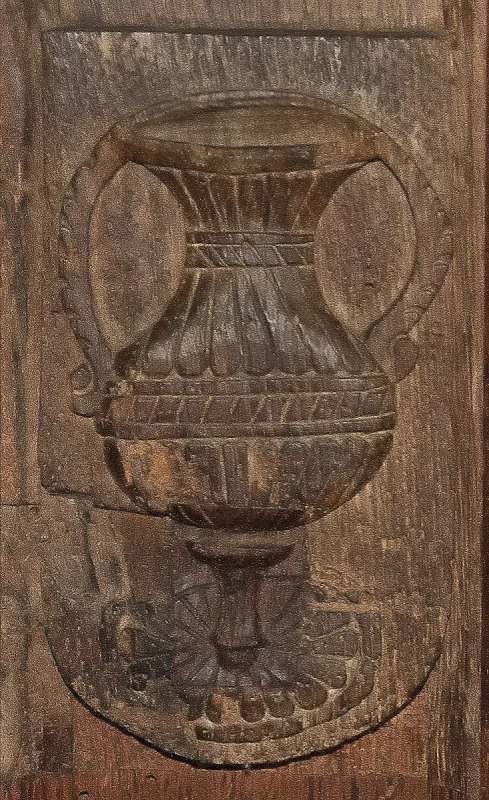
Carved bench ends are a distinctive feature of many churches in Devon and we have over fifty well preserved examples in Northlew. They have survived here for nearly five hundred years.
The bench ends were carved from ancient oaks in Tudor times when the church was remodelled and extended. One is dated 1537 with the local craftsmen funded by local landowners and benefactors such as William Kelly of Rutleigh Manor. When the church was restored in the late 1800s, renovation of the carved ends was under the direction of Harry Hems, a renowned ecclesiastical sculptor and carver from Exeter. At that stage many of them were repaired and the five at the head of the north aisle were replaced with new ones. Most of the carvings are of religious emblems relating to the Passion and Crucifixion and the glory of Jesus, but several have images of St Thomas, our Patron Saint.