Here you will find a virtual tour of the church and churchyard, over four pages. You can navigate between them from the top and bottom of each page.
There was probably a church on this spot at the time of the Domesday Book, but no trace of it remains today. It would have been much smaller, constructed of wattle and daub with a thatched roof and was probably on the site of the tower, with a similar footprint.
The church is Grade I listed, and several Norman features are still visible, including the west doorway, the tower windows and the font. A major revamp and extension of the building took place in the 16th century, funded by local benefactors such as William Kelly. The barrel roof with carved ribs and bosses was added, along with over sixty carved oak bench ends and rows of angels that look down from the wall plates. The oldest bench end is dated 1537.
Unfortunately, the building was neglected for over three hundred years when there were no resident priests, and it became very dilapidated. Following a determined effort to raise funds, a major restoration took place in the late 19th century under the direction of Harry Hems, a renowned ecclesiastical sculptor and carver from Exeter. The Tudor bench ends were repaired (and five new ones added), the barrel roof was restored and a new pulpit and lectern installed. The rebuilding of the imposing carved rood screen and loft which had been damaged during the Reformation took most of the 1920s.
The early church and restoration
Four Rectors in the late nineteenth and early 20th centuries made a huge contribution to the restoration of the church.
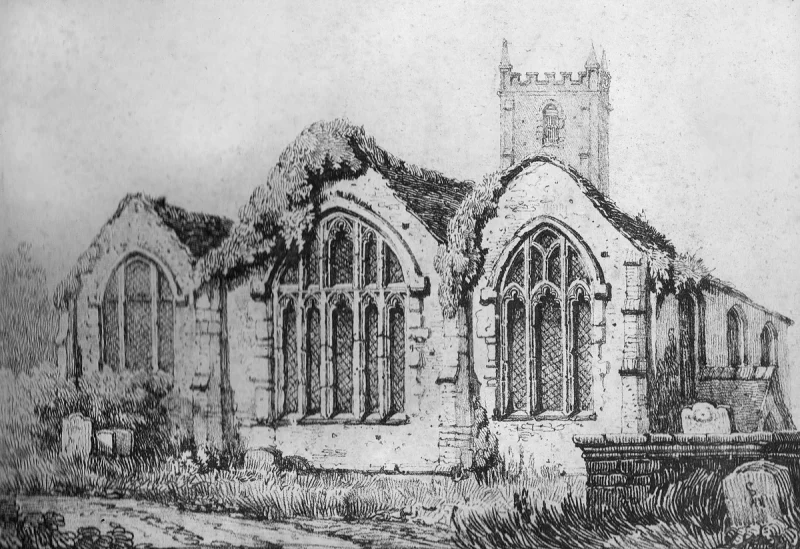
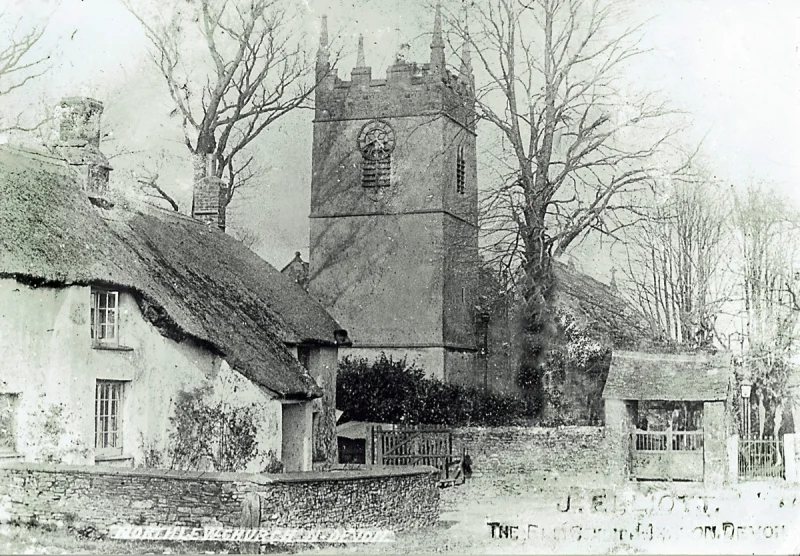
Thomas England was appointed in 1847 and documented the poor state of the building, overgrown with ivy, a leaky roof and in urgent need of restoration. His letters and entries in the logbook show his increasing frustration with the slow progress of restoration and the lack of support from parishioners. However, he persevered and achieved much of the groundwork that his successors were able to build on so effectively.
Revd England died in 1881 after thirty-four years in post and is buried in the old churchyard. His gravestone reads With Christ, which is far better – a fitting and heartfelt epitaph.
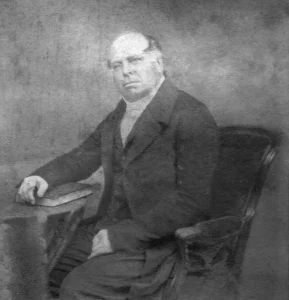
Samuel Asher Herbert succeeded England on his death and over the next three years wrote hundreds of letters, raised money and support and engaged Medley Fulford from Exeter as Architect. Herbert oversaw the restoration of the church but unfortunately the work was unfinished when he died in 1885. It was hurried on so his burial service could be the first to take place in the restored church. His grave is also in the old churchyard.
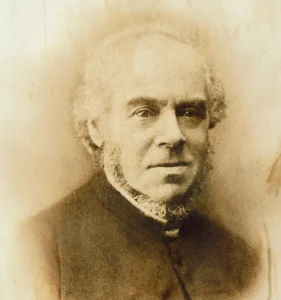
Herbert’s work was continued by John Worthington who was in post until 1919. He spent some time wiping out the heavy debt (nearly £800 – about £84,000 today) left after the reopening of the church before he could continue the restoration. Worthington oversaw the renovation of the Village Cross in 1900, the installation of the church clock and the Henry Willis organ. The new vestry was dedicated to him in 1909 and one of the bells is hung in his memory. His grave in the old churchyard rather modestly describes him as the Unworthy pastor of this parish for 33 years.
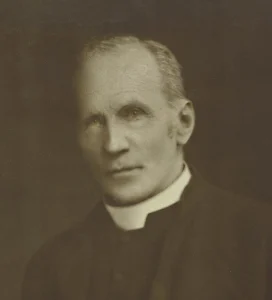
Canon William Romaine Hervey took over at the end of the First World War until he retired in 1938. During his tenure the Rood screen was rebuilt and finally completed in 1929. He was also very interested in the history of the church and wrote a book The place where the devil died with cold: History of the united parishes of Northlew & Ashbury which contains a wealth of information about the parish and village life. Hervey’s writings formed the basis of a booklet by H C Geipel (Rector from 1960 to 1969) which was sold to raise funds for church maintenance and repair.